
Android Auto’s Next Update Signals a Major Shift in In-Car Experience
Driving interfaces are starting to feel less like basic infotainment systems and more like connected smart devices. Google’s latest Android Auto showcase at Google I/O revealed a major shift in how drivers and passengers may interact with cars later this year.
The update introduces a redesigned interface, AI-powered Gemini tools, immersive navigation, customizable widgets, and deeper vehicle controls through Android Automotive.
The upcoming changes focus less on flashy additions and more on improving daily driving tasks. From clearer navigation guidance to smarter dashboard layouts, the update aims to reduce distractions while making in-car technology feel more natural.
A Cleaner and Smarter Dashboard
The refreshed Android Auto design follows Google’s Material 3 Expressive style language. While the visual update may sound minor on paper, the difference becomes noticeable once displayed on a vehicle dashboard.
The interface now features rounded elements, smoother transitions, and color themes that blend more naturally across apps. Instead of looking like separate windows running side by side, the dashboard feels more unified, similar to using an Android tablet.
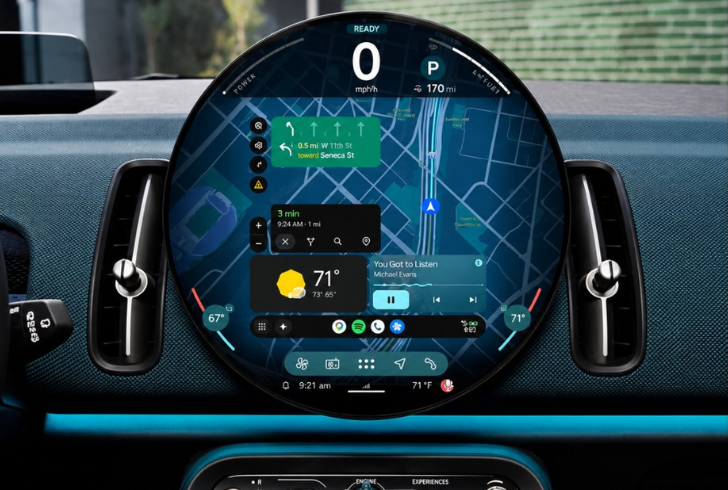
Instagram | hassanadx | The new Material 3 design completely transforms the Android Auto dashboard experience.
One of the biggest additions is the new three-panel layout. Drivers can simultaneously view Google Maps, smart home controls, and media playback without clutter taking over the screen. During Google’s demo inside the Volvo EX60, a YouTube video player automatically switched to audio-only mode once driving resumed. That small adjustment keeps entertainment accessible without interfering with road safety.
Custom-generated widgets also add more flexibility to the dashboard experience. These widgets can be created using prompts, allowing drivers to personalize information based on daily needs.
Google demonstrated a weather widget that analyzed conditions for activities like running and biking. Other practical uses may include traffic summaries, commute updates, nearby food recommendations, or reminders linked to regular routes.
Google Maps Gets More Realistic
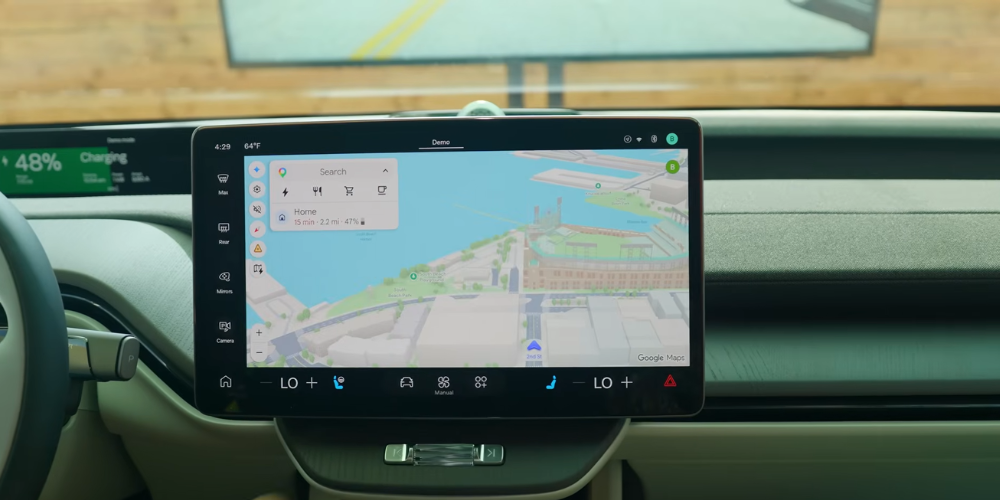
Google Maps is receiving one of the most noticeable improvements in the update. The new immersive navigation system displays buildings, stadiums, hills, tunnels, and overpasses with far more detail than before.
That added context may help drivers better understand upcoming roads and lane positioning, especially in dense cities where multiple levels of traffic can quickly become confusing. Areas filled with elevated roads, tunnels, and sharp lane changes often create navigation mistakes because standard map views lack depth and spatial awareness.
The upgraded visuals are designed to make routes easier to interpret at a glance. Instead of relying only on flat map guidance, drivers can now recognize landmarks and terrain in a more realistic format.
Gemini Expands Beyond Voice Commands
Google’s Gemini integration appears to be the centerpiece of Android Auto’s next phase. The AI assistant is being built to handle tasks in a more conversational and practical way, particularly during situations where drivers cannot safely interact with screens.
Vehicles using Android Automotive, Google’s built-in operating system, will gain access to deeper controls. During demonstrations inside the Volvo EX60, Gemini adjusted vehicle settings such as ambient lighting and sunroof opacity through voice commands alone.
The level of functionality will depend heavily on how each automaker supports Android Automotive features. Some manufacturers may allow extensive vehicle controls, while others could offer more limited integrations.
Gemini is also moving toward multimodal assistance. The AI can access vehicle cameras to identify surrounding landmarks and buildings. During one demonstration, Gemini recognized the Transamerica Pyramid and responded with additional details about the structure.
This approach shifts the assistant from simple command processing into something closer to a real-time driving companion.
More Natural Navigation Prompts
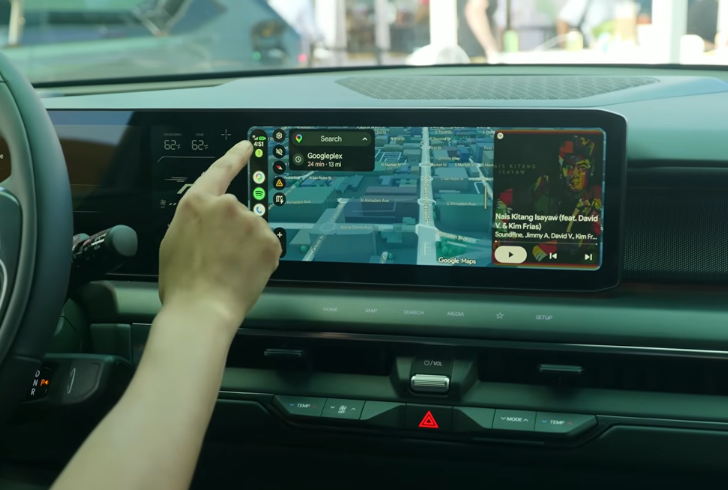
YouTube | CNET | A new Android Auto rolls out this year, featuring Gemini AI, customizable widgets, and immersive Google Maps.
A smaller update may end up having one of the biggest real-world benefits. Gemini’s navigation instructions now sound more human and easier to process while driving.
Instead of saying phrases like “turn left after 0.2 miles,” the assistant can deliver instructions such as “turn left at the intersection.” That adjustment removes unnecessary mental calculations and makes directions easier to follow during busy traffic conditions.
Simple language matters when drivers are focused on the road, changing lanes, or dealing with unfamiliar streets. Clear prompts reduce hesitation and improve reaction time, especially in crowded urban environments.
Android Auto’s Next Step
Google confirmed that the updated Android Auto experience will roll out gradually later this year. The release includes redesigned visuals, immersive Google Maps features, Gemini integration, customizable widgets, and expanded Android Automotive support.
The transition may still vary depending on vehicle compatibility and manufacturer support. Some cars will likely receive features faster than others, while certain Gemini capabilities could remain exclusive to Android Automotive systems.
Even so, the latest showcase signals a noticeable change in how in-car software is evolving. Android Auto is no longer focused only on mirroring smartphone apps. The platform is moving toward a smarter, more context-aware driving experience that blends navigation, communication, entertainment, and vehicle controls into a single connected system.
More inAuto News
-
`
 Auto.m Autonomous Taxi Concept Wins 2026 Red Dot Award
Cities are exploring new ways to improve transportation as demand grows for cleaner, smarter, and more convenient mobility solutions. Autonomous vehicles...
August 1, 2026 -
`
 Olympic Cyclist Pleads Guilty to Driving While Banned After Crash That Killed His Wife
Former Olympic cyclist Rohan Dennis has admitted to driving while disqualified, adding another chapter to a case that has drawn attention...
July 30, 2026 -
`
 Tesla’s Miami Robotaxi Launch Is Big News, but Will It Lift TSLA Stock?
Tesla continues to attract attention from both active traders and long-term investors, making TSLA one of the most closely watched stocks...
July 26, 2026 -
`
 All the Reasons Why You Shouldn’t Blindly Follow AI Money Advice
Artificial intelligence has quickly become part of everyday life. People now use AI to write emails, plan vacations, answer questions, and...
July 24, 2026 -
`
 Financial Advice From Millionaires That Could Actually Hurt Your Wallet
Money advice from millionaires often sounds convincing because it comes from people who have already built wealth. Still, success does not...
July 19, 2026 -
`
 Do You Really Need Rental Car Insurance? A Deeper Look
Renting a car feels simple until the person at the counter starts asking about insurance. Many travelers freeze at that moment...
July 17, 2026 -
`
 What Qualifies a Vehicle for Classic Car Insurance?
Owning a classic car is about more than preserving an older vehicle. Many enthusiasts appreciate vintage automobiles because they are easier...
July 12, 2026 -
`
 NHTSA Launches ‘Special Investigation’ After Fatal Tesla Crash Into Texas Home
A deadly Tesla crash in Texas is now at the center of a federal safety investigation. The U.S. National Highway Traffic...
July 8, 2026 -
`
 “Grand Theft Auto VI” Cover Art Revealed
Rockstar Games gave fans a fresh look at “Grand Theft Auto VI” after releasing the game’s official cover art on Thursday....
July 5, 2026
More From CashRoadster
-
 Simone Biles Says Three Masked Men Stole Her Six-Figure Porsche
Simone Biles has shared details about a frightening incident that happened during her final months in Chicago. The Olympic gold medalist...
AdviceOctober 10, 2026 -
 How to Lower Your Car Insurance Premium Without Dropping Essential Coverage?
Car insurance can feel painfully expensive, especially when your driving record has not changed. You renew the same policy, drive the...
Car InsuranceOctober 8, 2026 -
 California Proposes New Auto Insurance Rules for Single Drivers
California drivers could see a change in how auto insurance companies set premiums. Insurance Commissioner Ricardo Lara has announced a proposed...
Car InsuranceOctober 4, 2026 -
 Credit Acceptance Pays $710 Million to Settle Predatory Auto Lending Claims
One of America’s largest subprime auto lenders has agreed to a massive settlement over allegations that it put financially vulnerable drivers...
Auto NewsOctober 1, 2026 -
 EV vs. Hybrid vs. Gas | Which Car Works Best for a Road Trip?
A long road trip can reveal differences that city driving often hides. Charging time, fuel stops, highway range, energy prices, and...
Auto NewsSeptember 27, 2026
You must be logged in to post a comment Login