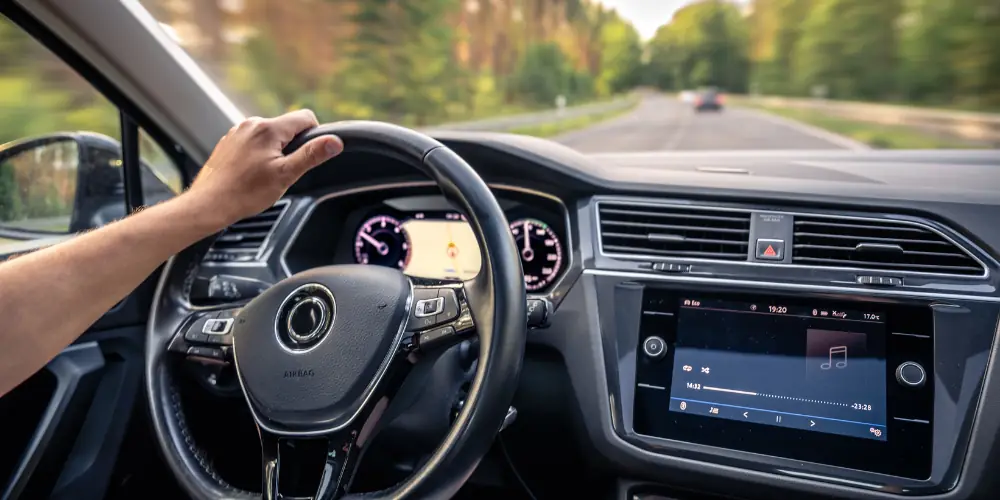
Music and driving often go hand in hand. For many drivers, a car ride feels incomplete without a song playing in the background. Playlists get curated for long highway stretches, slower tracks help during traffic jams, and louder volumes often appear when stress levels rise. Music feels harmless, even helpful. Yet research shows its impact on driving behavior is more layered than most people expect.
More than 80% of drivers listen to music on most trips, and a large number of younger drivers report difficulty concentrating without it. Music is widely believed to relax the mind, boost energy, or sharpen focus behind the wheel.
Scientific findings, however, suggest those benefits come with trade-offs that vary based on experience, volume, and music choice.
How Scientists Study Music and Driving

Researchers rely heavily on driving simulators to study how music influences behavior on the road. These simulators recreate real-world driving conditions while allowing researchers to control one variable at a time: the music.
This setup helps track detailed performance indicators, including:
1. Speed consistency
2. Reaction time
3. Lane control
4. Braking patterns
5. Following distance
6. Simulated crashes
7. Changes in heart rate and stress levels
By holding all other factors steady, researchers can link any change in driving performance directly to the music playing during the test.
Over the years, dozens of small studies have examined different genres, tempos, and volumes. Because individual findings sometimes conflict, scientists use meta-analyses to combine results and identify broader trends across multiple experiments.
What Research Reveals
When results are viewed together, clear patterns begin to form. Drivers who listen to music show a greater likelihood of simulated collisions, less accurate control over their speed, and wider fluctuations in the distance they keep from other vehicles.
Other measures, such as lane position, signaling accuracy, and raw reaction time, show mixed results depending on the study design and driver profile.
Music also affects the body. Studies show it changes heart rate patterns and increases mental workload. In simple terms, the brain becomes busier. While driving may still feel comfortable, attention is being split between the road and the audio input.
On long, monotonous drives, music can temporarily help reduce fatigue. This alertness boost usually lasts only 15 to 25 minutes before fading. As a result, music may improve mood and short-term focus while quietly adding cognitive strain.
Volume and Tempo Play a Role
Volume matters, though not as dramatically as many assume. Research points to small but consistent trends: low-volume music often leads to slightly slower driving and medium to high volumes tend to push speeds upward
These shifts are subtle, yet measurable.
Tempo alone does not offer a reliable safety prediction. While fast music often carries a negative reputation, meta-analyses show no universal effect on driving performance for the average driver. That said, individual studies still link very aggressive, high-arousal tracks to increased risk-taking and errors for some drivers.
The key factor appears to be arousal level rather than tempo by itself.
Personal Music Choices Make a Difference
Music selected by the driver usually causes fewer distractions than music imposed by someone else. Drivers often choose songs to regulate mood or stay calm, which can help stabilize driving behavior.
On the other hand, studies show that researcher-selected or disliked music leads to poorer outcomes. These include more collisions, more violations, and higher stress levels. Familiar music tends to reduce tension without demanding as much mental effort.
In short, the relationship with the music matters as much as the music itself.
Why Newer Drivers Face Higher Risk

Driving experience significantly changes how music affects performance. Younger and less-experienced drivers show greater vulnerability to distraction.
One study involving drivers aged 20 to 28 found that upbeat, happy tracks increased speeding behavior among inexperienced drivers. Experienced drivers showed no such change, suggesting practice helps buffer against distraction.
Another experiment revealed that aggressive genres, including metal and certain folk-pop styles, led to: higher average speeds, more driving errors and reduced attention to road signs.
For novice drivers, fast-tempo music increased mental workload and slowed hazard detection. Responses became less accurate and less timely. Slower music, by contrast, did not raise cognitive strain and even improved hazard awareness in some cases.
How Music Shapes Safer Driving Habits
For most drivers, familiar songs, calmer genres, and moderate volume levels cause the least disruption while still supporting a positive mood. Extremely loud, unfamiliar, or aggressive tracks are more likely to increase speed, divert attention, and overload the brain.
Newer drivers benefit from extra caution. Lower volumes or brief periods of silence can help during heavy traffic, poor weather, or complex road conditions.
Music changes how driving feels and how the brain works behind the wheel. It can lift mood, ease boredom, and help with short-term alertness. At the same time, it adds mental demand and can quietly influence speed, focus, and decision-making.
Understanding these effects allows drivers to make smarter choices, keeping music as a helpful companion rather than an unseen risk.