
Canada Unveils New Auto Industry Strategy, Shifts Away From U.S.
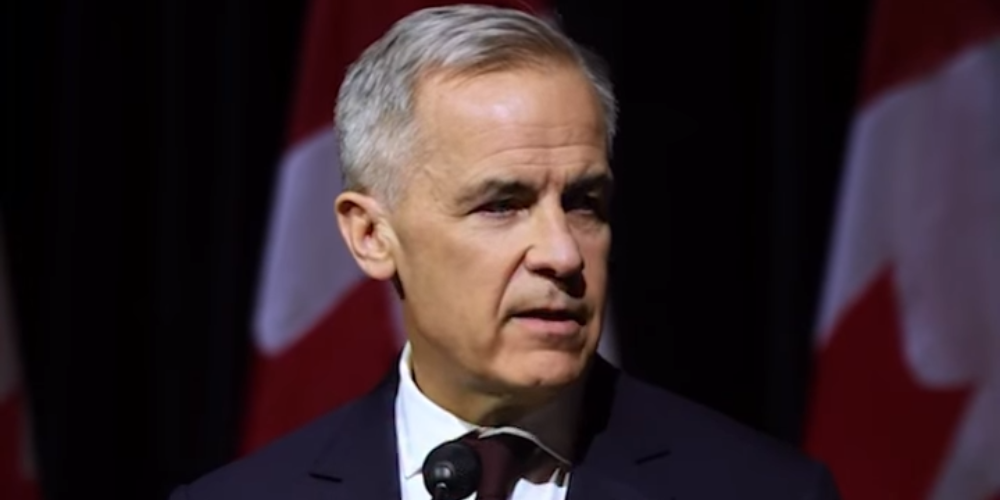
Canada is recalibrating its auto policy at a pivotal moment for North American manufacturing. Prime Minister Mark Carney introduced a new strategy aimed at stabilizing the country’s car sector and accelerating the shift to electric vehicles, as U.S. tariffs continue to strain production and trade flows.
The announcement signals a clear effort to reduce dependence on the United States while protecting domestic jobs and investment.
Tariffs Disrupt a Deeply Linked Industry

Instagram | @electricvehicletalks | Canada now reshapes its auto strategy to protect jobs and prepare for a future with less U.S. dependence.
The pressure stems from a 25% tariff imposed last year by U.S. President Donald Trump on Canadian-made vehicles and auto parts. The measure hit hard. About 90% of vehicles assembled in Canada are exported to the United States, making the industry highly exposed to cross-border policy changes.
For decades, U.S. automakers have operated in Canada under free trade arrangements that tightly connected supply chains across the region. Parts often cross the border several times before a vehicle is completed. That structure now faces uncertainty.
The United States-Mexico-Canada Agreement (USMCA) is scheduled for review this year. Carney stated at a Toronto auto plant that the agreement’s original goal—removing tariffs across North America—no longer aligns with the current direction of U.S. policy. “Their approach has changed,” he said, adding, “We have to prepare for all possibilities.”
Job Losses and Production Cuts
Since Trump’s return to the White House, thousands of Canadian auto workers have lost jobs. Major manufacturers, including General Motors and Stellantis, have reduced production at Canadian facilities. These pullbacks reflect both tariff costs and uncertainty around future trade rules.
The auto sector remains a major employer and a cornerstone of Canada’s manufacturing base. As output slows, regional economies tied to assembly plants and parts suppliers face ripple effects.
Carney’s plan introduces a new tariff credit system designed to offset costs for companies that build vehicles in Canada. Automakers such as Toyota and General Motors would qualify for credits if they maintain or expand domestic production.
The federal government will also restore consumer rebates for electric vehicles. This move stands in contrast to the United States, where the Trump administration ended subsidies that had reduced prices for certain battery electric, plug-in hybrid, and fuel cell vehicles.
At the same time, officials plan to implement stricter emissions standards for new vehicles. The goal is ambitious: electric vehicles should account for 90% of car sales by 2040.
A Shift in EV Policy

Freepik | frimufilms | Canada now pushes cleaner cars through stricter emissions rules instead of forcing fixed electric vehicle sales targets.
While strengthening emissions targets, Carney rolled back an electric vehicle sales mandate introduced in 2023 by former Prime Minister Justin Trudeau. Automakers had argued that the mandate imposed high costs and limited flexibility.
Carney explained that replacing the sales quota with tighter emissions rules “focuses on the results that matter to Canadians, while avoiding undue burdens on the Canadian auto industry.” The adjustment aims to balance environmental goals with economic realities.
Environmental groups quickly criticized the decision to abandon the sales mandate, warning that it could slow progress toward electrification.
Expanding Trade Ties Beyond the U.S.
Canada has shifted its focus outward in recent weeks. A new deal with China will ease tariffs on Chinese electric vehicles. Canada introduced those tariffs alongside the United States in 2024. Another agreement with South Korea aims to attract Korean automakers to invest and build vehicles in Canada.
These deals could change competition across North America. Stronger ties with Asian partners may lower reliance on U.S.-based firms. They also open new paths for foreign investment.
Canada is reshaping its trade and industrial strategy to shield the auto sector from tariff pressure. At the same time, it is pushing harder on electric vehicle growth. The plan includes production credits, restored EV rebates, tougher emissions rules, and broader trade partnerships. Together, these measures support an industry that provides thousands of jobs.
As the USMCA review approaches, the government is preparing the sector for change. Officials want a more competitive industry with a stronger focus on electric vehicles.
More inAuto News
-
`
 What Qualifies a Vehicle for Classic Car Insurance?
Owning a classic car is about more than preserving an older vehicle. Many enthusiasts appreciate vintage automobiles because they are easier...
July 12, 2026 -
`
 NHTSA Launches ‘Special Investigation’ After Fatal Tesla Crash Into Texas Home
A deadly Tesla crash in Texas is now at the center of a federal safety investigation. The U.S. National Highway Traffic...
July 8, 2026 -
`
 “Grand Theft Auto VI” Cover Art Revealed
Rockstar Games gave fans a fresh look at “Grand Theft Auto VI” after releasing the game’s official cover art on Thursday....
July 5, 2026 -
`
 Why ‘Super Commuting’ Is Becoming a New Normal in Northern California
For thousands of workers across Northern California, a long drive to work is no longer an occasional inconvenience. It has become...
July 3, 2026 -
`
 Why Advanced Headlights Used Worldwide Are Still Restricted in America
Night driving was once associated with quieter roads and a calmer driving experience. Today, many motorists face a different reality. Intense...
June 28, 2026 -
`
 How 2026 Graduates Can Establish a Solid Financial Ground for Future Decades
Graduation marks the beginning of a new financial chapter filled with opportunities, responsibilities, and choices that can shape the future. The...
June 26, 2026 -
`
 Is Running Your AC All Day Saving Money or Raising Energy Bill?
As temperatures climb, air conditioners become one of the hardest-working appliances in many homes. A common belief is that keeping an...
June 21, 2026 -
`
 Everything You Ought to Know About Car Insurance in Texas
Texas drivers cover millions of miles every day. They go through packed highways in Houston, long stretches of interstate roads in...
June 18, 2026 -
`
 Why Liability Auto Insurance Is Required but Full Coverage Isn’t
Car insurance rules often feel uneven. One part is enforced by law, while another is left to personal choice or financial...
June 14, 2026
More From CashRoadster
-
 Adding Your Teen to Your Car Insurance? Costs and Ways to Save
A newly licensed teen can bring excitement to a household, but the first auto insurance bill may bring a surprise. Young...
DrivingSeptember 19, 2026 -
 Here’s How Much Spending Money Your College Student Should Get
The tuition is paid, the dorm room is booked, the meal plan is set, and the car is packed. Your college...
AdviceSeptember 18, 2026 -
 How Much Money Should You Keep in an Emergency Fund?
With everyday expenses remaining high across the U.S. in 2026, an emergency fund can provide a needed buffer when an unexpected...
AdviceSeptember 13, 2026 -
 How Staying With the Same Car Costs You More in Insurance
Loyalty usually sounds like something a company should reward. Stay with the same business for years, pay your bills on time,...
Car InsuranceSeptember 11, 2026 -
 State Farm Is Sending Out $5 Billion in Dividends. Here’s Who Qualifies
After several years of rising auto insurance costs, some State Farm customers are now getting money back. State Farm has started...
Car InsuranceSeptember 6, 2026
You must be logged in to post a comment Login