
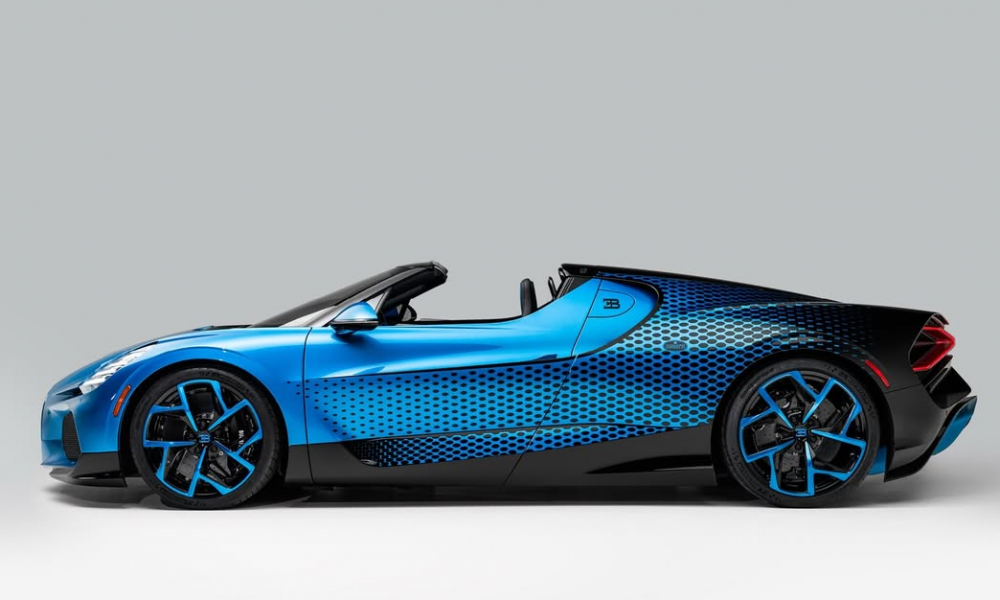
Bugatti W16 Mistral “Fly Bug” Is a One-of-a-Kind Hypercar Inspired by a Dragonfly
Bugatti knows how to build fast cars. That part is obvious. What keeps the brand ahead is its ability to turn machines into moving sculptures. The new Bugatti W16 Mistral “Fly Bug” proves that point better than almost anything the company has made before.
This one-of-a-kind roadster was created through Bugatti’s Sur Mesure personalization division. It was built for a long-time collector who already owns three custom Bugattis inspired by insects. The collection includes the Veyron “Hellbug,” the Chiron “Hellbee,” and the Divo “Lady Bug.” Now, the dragonfly-inspired “Fly Bug” completes the set in dramatic fashion.
Every surface, every pattern, and every detail was carefully designed to reflect the look and movement of a dragonfly. The result feels more like a concept car from an auto show than a real production machine. Yet this hypercar is very real, very fast, and wildly expensive.
Dragonfly Design Gives the Mistral a New Identity
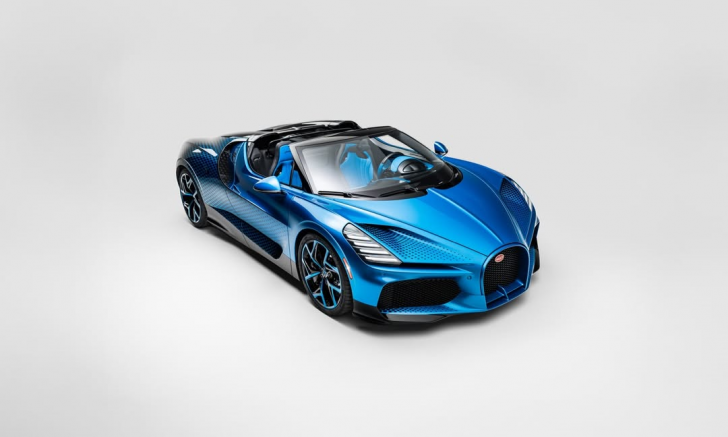
Bugatti / IG / Bugatti developed a special color called “Dragonfly Blue” for this project. It shifts between bright blue and turquoise depending on the light and viewing angle.
The effect closely matches the shimmering wings of a dragonfly flying through sunlight.
That changing color effect gives the car a sense of motion even when parked. The finish almost appears alive under different lighting conditions. It also works perfectly with the shape of the W16 Mistral, which already has one of the smoothest body designs in modern hypercars.
The luxury carmaker added another striking detail across the bodywork. A flowing pattern of elliptical shapes spreads from the front of the car toward the rear. The pattern starts light and subtle, then gradually becomes thicker and darker as it reaches the air intakes.
The design creates visual movement across the body panels. It almost feels like air flowing around the car at high speed. Instead of looking forced or flashy, the pattern blends naturally into the sculpted lines of the Mistral. That balance is difficult to achieve on a car this complex.
One detail stands above the rest because Bugatti had never attempted it before. The famous Bugatti Macaron badge was integrated directly into the painted side graphic. Normally, the emblem only appears on the grille.
The Cabin Matches the Exterior’s Wild Attention to Detail
Inside the “Fly Bug,” Bugatti continued the dragonfly theme instead of stopping at the paintwork. The cabin uses a layered mix of leather and Alcantara, finished with a three-dimensional geometric pattern inspired by the exterior graphics.
The texture stretches across the seats, doors, and dashboard surfaces without interruption. It even extends across the armrests, something Bugatti had never done before. That required engineers and designers to work closely together because curved interior surfaces are difficult to wrap consistently.
The result feels rich without looking overloaded. Some custom interiors become too busy once every panel gets decorated. The “Fly Bug” avoids that mistake because the shapes and colors flow naturally through the cabin. The textures add depth rather than visual clutter.
Bugatti also included a small artistic detail inside the gear selector. A miniature “Dancing Elephant” sculpture sits within the mechanism as a tribute to Rembrandt Bugatti, the famous sculptor and brother of company founder Ettore Bugatti.
The Legendary W16 Engine Ends Its Story in Style
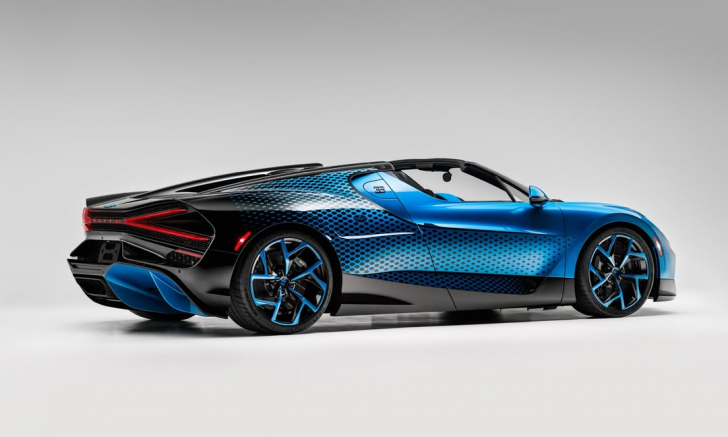
Bugatti / IG / The “Fly Bug” still uses Bugatti’s massive 8.0-liter quad turbocharged W16 engine, producing 1,578 horsepower and 1,600 Nm of torque.
Those numbers remain absurd even in today’s hypercar world. The open-top roadster can sprint from 0 to 100 km/h in roughly 2.4 seconds while pushing beyond 450 km/h at full speed. That makes it one of the fastest convertibles ever built.
However, what gives the “Fly Bug” extra significance is timing. The W16 Mistral marks the final road-going Bugatti powered by the company’s legendary W16 engine. Future Bugatti models will move toward a new V16 hybrid setup beginning with the upcoming Tourbillon.
More inAuto News
-
`
 Why Removing Chinese Hardware Could Disrupt the U.S. Auto Industry
The U.S. auto industry is entering a new chapter. This time, the challenge is not electric vehicles, battery technology, or self-driving...
August 6, 2026 -
`
 Auto.m Autonomous Taxi Concept Wins 2026 Red Dot Award
Cities are exploring new ways to improve transportation as demand grows for cleaner, smarter, and more convenient mobility solutions. Autonomous vehicles...
August 1, 2026 -
`
 Olympic Cyclist Pleads Guilty to Driving While Banned After Crash That Killed His Wife
Former Olympic cyclist Rohan Dennis has admitted to driving while disqualified, adding another chapter to a case that has drawn attention...
July 30, 2026 -
`
 Tesla’s Miami Robotaxi Launch Is Big News, but Will It Lift TSLA Stock?
Tesla continues to attract attention from both active traders and long-term investors, making TSLA one of the most closely watched stocks...
July 26, 2026 -
`
 All the Reasons Why You Shouldn’t Blindly Follow AI Money Advice
Artificial intelligence has quickly become part of everyday life. People now use AI to write emails, plan vacations, answer questions, and...
July 24, 2026 -
`
 Financial Advice From Millionaires That Could Actually Hurt Your Wallet
Money advice from millionaires often sounds convincing because it comes from people who have already built wealth. Still, success does not...
July 19, 2026 -
`
 Do You Really Need Rental Car Insurance? A Deeper Look
Renting a car feels simple until the person at the counter starts asking about insurance. Many travelers freeze at that moment...
July 17, 2026 -
`
 What Qualifies a Vehicle for Classic Car Insurance?
Owning a classic car is about more than preserving an older vehicle. Many enthusiasts appreciate vintage automobiles because they are easier...
July 12, 2026 -
`
 NHTSA Launches ‘Special Investigation’ After Fatal Tesla Crash Into Texas Home
A deadly Tesla crash in Texas is now at the center of a federal safety investigation. The U.S. National Highway Traffic...
July 8, 2026
More From CashRoadster
-
 Why ‘Moneymaxxing’ Can Boost Your Savings but Going Too Far Can Cost You More Than It Saves!
Saving money has a new social media name, and it sounds much more exciting than balancing a budget. The trend is...
AdviceOctober 15, 2026 -
 Simone Biles Says Three Masked Men Stole Her Six-Figure Porsche
Simone Biles has shared details about a frightening incident that happened during her final months in Chicago. The Olympic gold medalist...
AdviceOctober 10, 2026 -
 How to Lower Your Car Insurance Premium Without Dropping Essential Coverage?
Car insurance can feel painfully expensive, especially when your driving record has not changed. You renew the same policy, drive the...
Car InsuranceOctober 8, 2026 -
 California Proposes New Auto Insurance Rules for Single Drivers
California drivers could see a change in how auto insurance companies set premiums. Insurance Commissioner Ricardo Lara has announced a proposed...
Car InsuranceOctober 4, 2026 -
 Credit Acceptance Pays $710 Million to Settle Predatory Auto Lending Claims
One of America’s largest subprime auto lenders has agreed to a massive settlement over allegations that it put financially vulnerable drivers...
Auto NewsOctober 1, 2026
You must be logged in to post a comment Login