
U.S. Reduces Tariffs on Japanese Cars to 15% Under Trump’s Deal
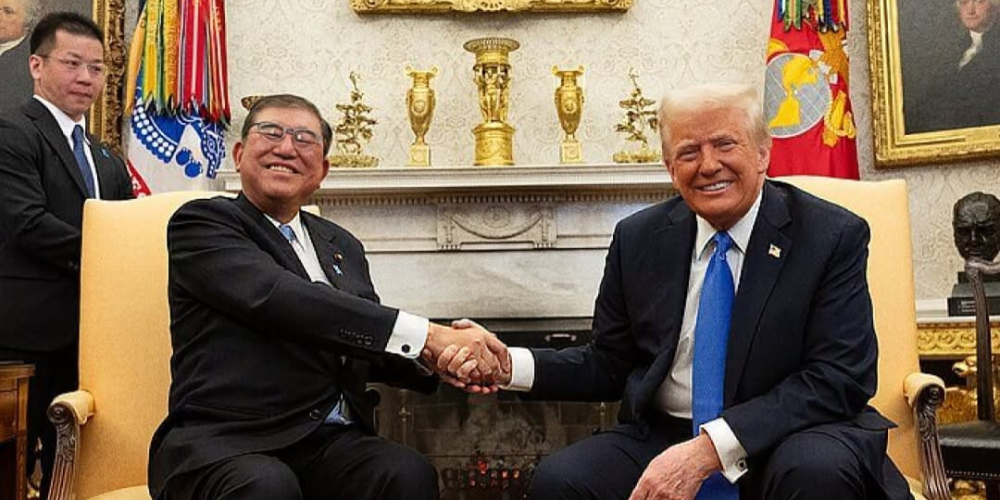
In a move reshaping U.S.-Japan trade relations, former President Donald Trump confirmed a new agreement that slashes tariffs on Japanese car imports to 15%. The announcement, made on social media, followed months of mounting pressure and negotiation.
Previously, the administration threatened a steep 25% tariff on Japanese vehicles if a deal wasn’t reached before August 1. Instead, this agreement not only eased that threat but also brought new developments for both American and Japanese automakers.
Key Terms of the Deal
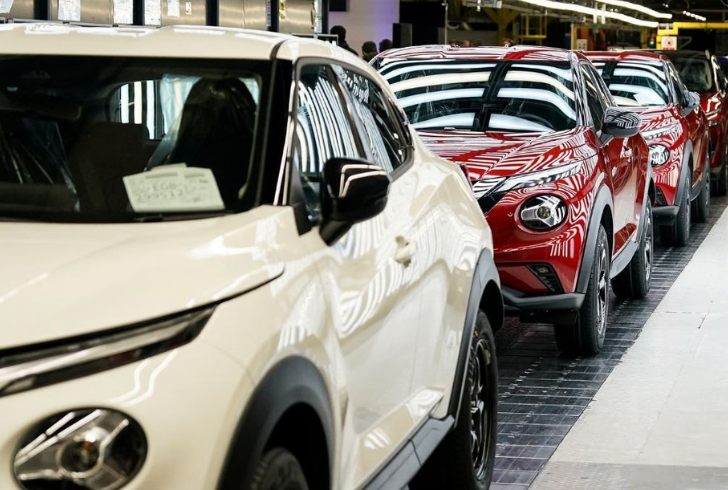
Instagram | newsofbahrain_ | Trump confirmed 15% tariffs on Japanese cars after negotiations.
The trade pact includes several headline-making points:
1. Japanese car exports to the U.S. now face a 15% tariff, reduced from the proposed 25%.
2. Japan will open its ports to more American vehicles, including trucks.
3. The deal includes additional agricultural exports from the U.S., such as rice.
4. Japan will invest $550 billion into the United States as part of the agreement.
These provisions mark a significant shift in how the two nations manage automotive trade. The U.S. auto industry, already strained by global tariffs, saw this as a critical update.
How the Tariff Breakdown Works
Although the 15% tariff seems straightforward, it actually includes layered components. According to Japan’s NHK broadcaster, the administration agreed to reduce the auto-specific tariff from 25% to 12.5%. Combined with the existing 2.5% import duty, the final rate now stands at 15%. That still represents a major drop from what could’ve been a damaging 25% charge.
According to The New York Times, Shigeru Ishiba, Japan’s Prime Minister at the time, acknowledged the update and awaited further clarification from diplomats based in Washington.
Impact on Japanese Automakers and Market Response
Japan’s automotive sector quickly responded to the announcement. The trade deal comes as a relief, particularly given the country’s heavy reliance on vehicle exports to the U.S. Major Japanese auto brands experienced an immediate surge in investor confidence:
Toyota shares rose by 14%
Nissan climbed by 8%
Honda jumped 11%
Analysts pointed out that reduced tariffs mean stronger competitiveness for Japanese models in the American market. Vehicles that previously faced higher import duties can now sell at lower prices or bring greater profit margins.
Concerns From U.S. Industry Leaders
Instagram | @revistapluspy | American car makers are frustrated, as the Japan deal disadvantages their North American vehicles.
While the deal appears favorable for Japanese automakers, it has stirred unease among American car companies. The American Automotive Policy Council—representing Ford, General Motors, and Stellantis—argues that the agreement tilts the playing field against North American manufacturers.
Their concern centers on the fact that many Japanese imports contain only a small fraction of U.S.-made components, yet they will now be subject to a lower tariff than cars assembled in North America with a far higher share of domestic parts. Council President Matt Blunt called it a direct blow to American industry, saying such deals “undercut American workers and businesses.”
Union leaders and trade advocates share this view, seeing it as yet another example of policy that rewards foreign assembly over homegrown production.
A New Chapter in U.S.-Japan Automotive Trade
For consumers, reduced tariffs could mean Japanese cars hitting U.S. showrooms at more competitive prices—possibly making models like the Toyota Corolla Hybrid or Honda CR-V even more appealing to budget-conscious buyers. Yet this affordability comes with a flip side: American automakers may be pushed to trim costs, rethink supply chains, or double down on unique selling points such as advanced EV technology, luxury features, or niche performance models.
In the bigger picture, the agreement is part of a broader U.S.-Japan effort to cement economic ties in the face of shifting global trade dynamics, where tariffs are as much a diplomatic tool as they are an economic one. Trump’s administration repeatedly leaned on tariffs as negotiation tools — this deal proves that pressure can yield strategic outcomes when used deliberately.
Lower tariffs often open doors. With this agreement, Japan gains room to grow in the American market, while U.S. manufacturers must now rethink their strategy. Trade talks like these remind global players that economic influence doesn’t only come from products—it also comes from policy.
More inAuto News
-
`
 Van Driver Loses License After Blaming Dog for Railway Station Crash
A morning crash at a busy railway station in North Yorkshire ended with a driving ban after a van driver blamed...
February 14, 2026 -
`
 How Thermal Imaging Helps Homeowners Cut Energy Bills and Emissions
Rising energy costs and growing climate concerns have made home efficiency a priority for many households. In parts of southwest England,...
February 5, 2026 -
`
 How to File an Auto Insurance Claim – A Complete Guide
A car accident can leave anyone shaken. In those moments, knowing what to do next keeps both safety and finances protected....
January 31, 2026 -
`
 Are Violent Video Games Like GTA 6 Becoming Too Real?
Video game visuals have entered a new phase. Faces look scanned from real life, lighting reacts like a movie set, and...
January 24, 2026 -
`
 The Surprising Effects of Music on Your Driving Performance
Music and driving often go hand in hand. For many drivers, a car ride feels incomplete without a song playing in...
January 17, 2026 -
`
 How to Escape the 9-to-5 Grind and Achieve Work-Life Balance
Work sits at the center of many New Year’s resolutions in the United States. Pew Research reports that nearly one in...
January 11, 2026 -
`
 Understanding How Split Limits Work in Auto Insurance Policies
When it comes to auto insurance, understanding how coverage limits work is essential for making informed financial choices. One important concept...
January 1, 2026 -
`
 Why Your Car’s Windows Always Look Cloudy (And How to Fix It)
Car owners often notice a stubborn haze coating the inside of their windshields. It’s not ordinary dust or dirt, and no...
December 26, 2025 -
`
 Why Are Most Experienced Drivers Afraid of Motorways?
For some drivers, the highway feels less like freedom and more like fear. Even after years of experience, many still tense...
December 18, 2025
More From CashRoadster
-
 Why “Grow Faster” Is Often the Most Misleading Advice for Founders
Every founder hears the same message at some point: grow faster. Increase revenue, expand the client base, scale operations, and push...
AdviceMay 24, 2026 -
 Insurance Companies are ‘Totaling’ More Cars Even After Minor Crashes, Here’s Why
A small crash used to mean a quick trip to the body shop. Now, it can mean losing your car entirely....
Car InsuranceMay 22, 2026 -
 When Car Insurance Costs the Most and Least in Your Lifetime
Car insurance prices rarely stay flat throughout life. Rates shift with age, driving experience, accident risk, and even lifestyle habits. A...
Car InsuranceMay 17, 2026 -
 Bugatti W16 Mistral “Fly Bug” Is a One-of-a-Kind Hypercar Inspired by a Dragonfly
Bugatti knows how to build fast cars. That part is obvious. What keeps the brand ahead is its ability to turn...
Auto NewsMay 15, 2026 -
 Understanding the Difference Between Motorcycle and Car Engines
Cars and motorcycles dominate modern roads, each powered by engines designed to turn fuel into motion through controlled combustion. At a...
Auto NewsMay 10, 2026
You must be logged in to post a comment Login